
Monday AI & Growth Brief: Google Just Changed How We Can Measure AI Search
entry001 · 7 September 2026 · covering 31 August–7 September
Google’s new Search Console AI reporting, a citation bug, AI referral behaviour and a broader lesson about how AEO measurement needs to evolve.
This week has a useful through-line: AI search measurement got more official, while simultaneously demonstrating why it still cannot be treated like traditional search analytics. At the workflow end, the jump in model capability is making the quality of the system around the model more important, not less.
1. Google has now given everyone an official AI visibility report, but deliberately left out two things we’d really like
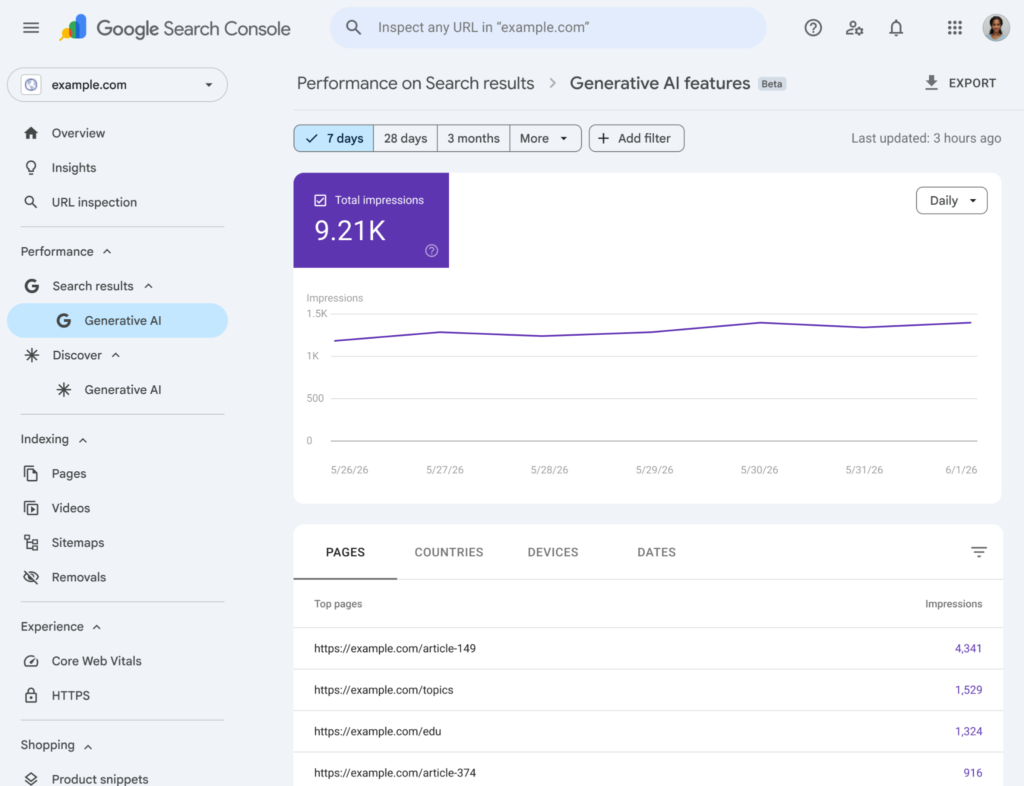
On 31 August, Google completed the global rollout of Search Console’s dedicated generative-AI reporting for AI Overviews and AI Mode. Site owners can now inspect AI-search impressions by page, country, device and time.
The conspicuous omissions are queries and clicks.
So we can increasingly answer “Where is Google exposing this site through generative search?” but not cleanly “What did the person ask?” or “Did that exposure send them here?”
This is almost a perfect real-world example of the distinction I have run into while researching the subject matter for my own clients: Visibility ≠ influence ≠ acquisition. Search Console is becoming an increasingly useful visibility instrument, but it is not an AI attribution system.
This got me thinking about my own client reporting. Given this realization, I might now create three separate layers rather than forcing everything into one AEO score:
- AI visibility: Search Console generative-AI impressions + controlled prompt tracking.
- AI acquisition: identifiable AI referral traffic and attributable AI-originated sessions.
- Business influence: Branded demand, assisted journeys, CRM outcomes and other supporting evidence.
The inability to join those perfectly is currently a property of the ecosystem. Adding a Generative Search baseline to every SEO/AEO audit for clients who will access this new report will allow us to capture the baseline. Six months of historical AI visibility data will become substantially more useful than trying to reconstruct it later.
2. Google also gave publishers an AI-search opt-out without removing them from normal search
This is potentially more consequential than the reporting feature.
The new control allows publishers to exclude their content from powering Google’s generative AI features while remaining eligible for traditional Search. The change is already attracting scrutiny from European regulators, who are asking publishers whether Google’s implementation meaningfully resolves concerns around AI-generated summaries and lost traffic.
This makes the question more explicit: “What is being visible inside AI actually worth to us?”
Until now, publishers and brands largely received AI exposure whether or not they could quantify its return. Now there is at least the beginning of a trade-off: AI visibility and influence versus content consumption without a website visit.
I would not recommend to opt out reflexively. Instead, I’d use it as a measurement question. Before making that decision, examine:
- AI visibility
- organic traffic trends
- brand demand
- AI referral traffic
- commercial importance of the affected content
- likelihood that AI exposure assists later discovery.
This is especially relevant to publishers. For most commercial brands, I’d currently lean toward remaining discoverable unless the evidence suggests otherwise. Wouldn’t you?
3. A tiny Google bug this week exposed a very large AEO measurement problem
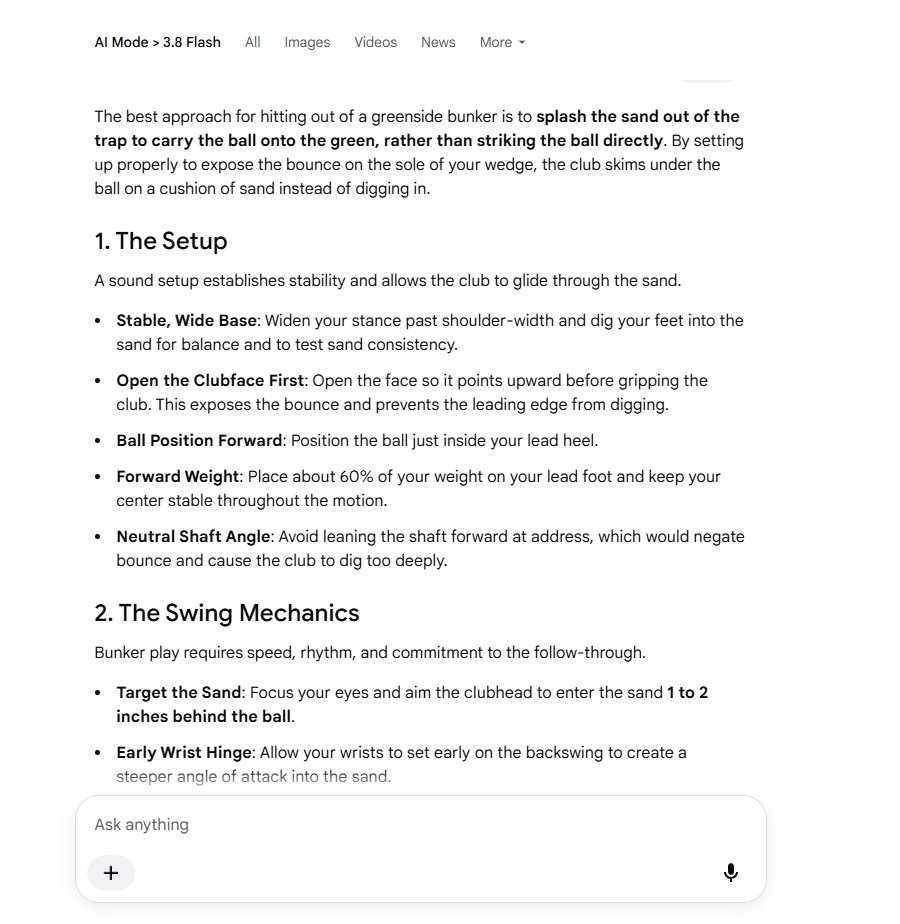
On 2 September, Google introduced Gemini 3.8 Flash into AI Mode for Pro and Ultra subscribers. Early testers noticed something strange: many responses contained almost no citations or links. Google subsequently confirmed that this was not intended behavior, and the issue was fixed on 4 September.
Imagine, for example, you were tracking AI citations daily.
- September 2: Brand visibility ↓ 38%.
- September 4: Brand visibility ↑ 61%.
An AEO dashboard could happily report both changes. Nothing happened to the brand. Nothing happened to the website. Nothing happened to its authority. The interface changed. This is one of the strongest arguments yet against treating AI visibility monitoring like rank tracking. A citation is produced by a stack: model + retrieval system + prompt + interface + source selection + product behavior. And any one of those can change.
The AI Visibility methodology I have been using for my audits should therefore include environment annotations, much like we’ve been doing when interpreting SEO and CRO changes:
- model updates
- AI-interface changes
- citation bugs
- tracking methodology changes
- major algorithm changes.
Without that context, AI dashboards can produce extremely convincing (even if entertaining) fiction.
4. CRO: we’re getting more evidence that AI-referred visitors behave differently
This isn’t a release from the past seven days, but it became particularly relevant alongside this week’s Search Console rollout and is worth adding to the operating model.
Contentsquare’s large retail benchmark, covering 26+ billion sessions across more than 2,200 websites, reports that AI-referred retail traffic reaches purchase in roughly two fewer pages than typical journeys. That’s directionally consistent with the hypothesis we’ve been developing around how AI may perform part of the consideration journey before the customer arrives. It doesn’t prove that every ChatGPT visitor is magically “high intent.” Different industries, prompts and AI systems will behave differently. But it might change what I’d test moving forward.
For AI-referred visitors, we may have to compare than just conversion rate. We will need to closely compare:
pages to conversion
time to conversion
entry page
internal search usage
product/category progression
return visits
conversion value
We may discover that the optimal AI landing experience isn’t a better educational page. It may just be a shorter decision path. This is quickly becoming one of the most interesting areas where my own CRO work and how it can differentiate how I approach AEO.
5. AI workflows just received another capability jump, but the important development isn’t the benchmark score
OpenAI released GPT-6 Astra on 3 September, initially to a limited set of organizations, with broader availability planned. The release specifically emphasizes complex multi-step work, computer use, research and producing documents, spreadsheets and presentations while adapting to changing requirements.
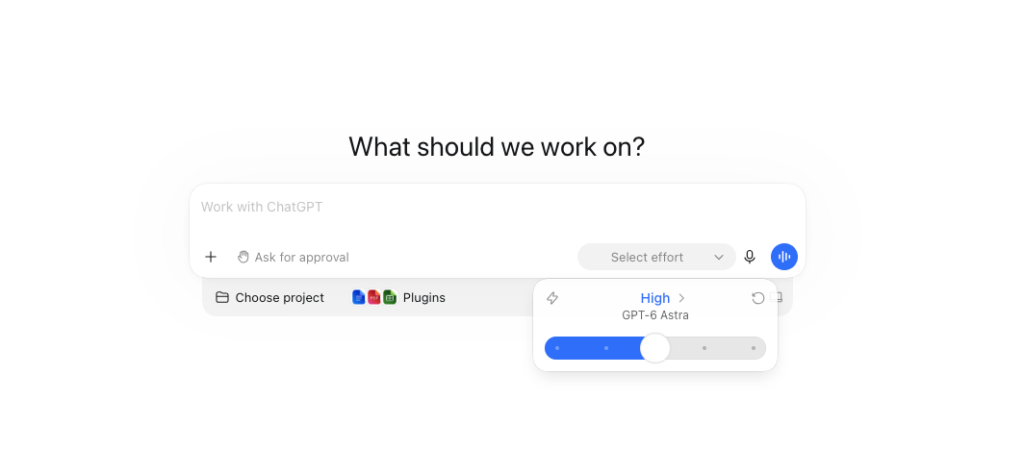
The part that is most important for me is the safety architecture. Astra is OpenAI’s first broadly deployed model classified at its Critical cybersecurity capability threshold. OpenAI consequently added stronger monitoring, isolation and safeguards around agent behavior.
Why should a marketing consultant care about cybersecurity architecture? Because it shows the same design principle at a much higher-stakes level: More capable agents require stronger boundaries around what they’re allowed to do.
This changes how I think about my own AI working environment, and how I will approach it from here on out.
6. Salesforce is turning this same idea into an enterprise architecture
Salesforce and Anthropic’s Claudeforce partnership is moving toward the open beta of Salesforce in Claude this month.
The initial Salesforce-in-Claude implementation contains 37 pre-built skills, with actions governed by existing Salesforce permissions and business rules.
Again, the interesting bit isn’t Claude inside CRM. It’s the combination of skills, trusted data, permissions and actions. That architecture is appearing independently across multiple AI ecosystems.
7. One analytics reminder before anyone diagnoses September performance
There was a temporary Google Analytics reporting issue affecting 1 September, where some properties displayed zero or missing traffic in main charts. Reports indicated that while standard reports showed missing or zero traffic, affected users reported that realtime continued to show activity, suggesting collection was still occurring while standard reporting/processing was affected.
Operationally important, even if not not strategically fascinating. If a client dashboard suddenly contains a magnificent September 1 cliff, we probably shouldn’t diagnose customer behavior before checking the instrument.
What I am going to test this week
The most immediate opportunity is to capture Search Console AI baselines for clients now. Preserve them, without overinterpreting them.
Second, I will update my emerging AI Visibility methodology to explicitly separate Visibility, Influence, Acquisition, Behavior and Outcome.
The global Search Console rollout makes that framework more useful, because Google now gives us a first-party measurement source for the first layer while conspicuously demonstrating why it cannot answer the others.
Third, I will add AI environment changes to the same change log I use for Google updates, website releases, tracking changes and campaign changes. This week’s citation bug is the loudest little warning shot.
And finally, for the AI workflow system I am developing around my own work, I will test the application of a new architecture following: Context → Skills → Tools → Permissions → Evaluation.
It’s slowly taking shape as everything keeps changing around us.
Sources:
- EU antitrust regulators quiz publishers on Google’s AI search opt-out, by Reuters
- 3 Google AI Changes, 0 New Clicks: DesignRush SEO Roundup, by DesignRush News
- Gemini 3.8 Flash rolling out in Google Search, by Search Engine Land
- Google AI Mode Gemini 3.8 Flash Not Link / Citation Friendly?, by Search Engine Roundtable
- The ultimate guide to optimizing digital experience on retail sites, by Contentsquare
- OpenAI Release Notes, by OpenAI
- The #1 AI meets the #1 CRM. Welcome to Claudeforce, by Salesforce
- Google Analytics September 1 Data Missing, by Search Engine Roundtable
